Trial file
Retatrutide: the comparison groups
The weight result is substantial. The other group deserves room beside it, along with the pulse readings and the separate liver-fat and diabetes questions.
The obesity trial
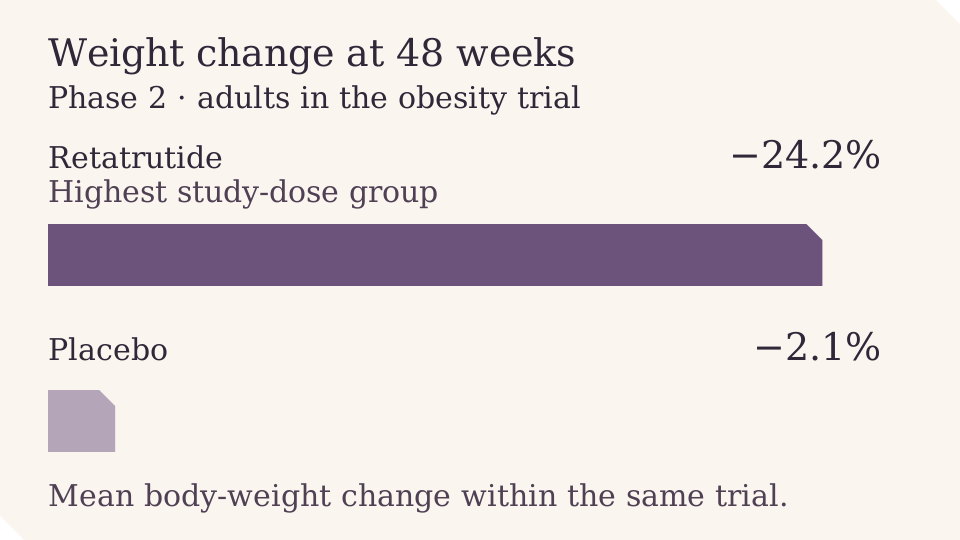
In the Phase 2 obesity trial, the highest study-dose group had a mean body-weight change of −24.2% at 48 weeks. Placebo recorded −2.1%. The study involved adults with obesity, or overweight with a weight-related condition. It tested retatrutide under medical follow-up.
I give that placebo group real space because it helps locate the effect of adding retatrutide within the trial. The retatrutide figure deserves its full size. It also deserves the people, observation period and comparison that produced it.
Digestive adverse events increased with the amount given and were mostly mild to moderate. Heart rate rose in a dose-dependent way, peaking around 24 weeks. Those changes came from the same experiment as the weight result; they belong in an assessment of the treatment’s effects.
Diabetes testing; liver imaging
The Phase 2 diabetes trial included 281 adults with type 2 diabetes. At the highest study dose, HbA1c changed −2.02% at 24 weeks and body weight fell 16.94% at 36 weeks, with smaller changes on placebo. The HbA1c figure expresses a change in percentage points on that test. Its result and the later weight measurement answer different questions.
The liver and diabetes experiments broaden the case beyond a single weight-loss claim. In the liver-fat substudy, participants had overweight or obesity and metabolic dysfunction-associated steatotic liver disease. Liver fat changed −82.4% relative to its starting level at 24 weeks in the highest study-dose group; 86% reached the study’s normal liver-fat threshold. That threshold concerns fat measured on a scan. Resolution of every form of liver damage would require other evidence.
The later analysis of blood fats and metabolites revisited two Phase 2 trials and found changes linked to improved insulin resistance. A fresh analysis of existing samples can help explain biology. It adds no new randomized comparison of heart attacks or kidney failure.
How does retatrutide work?
Retatrutide activates GIP, GLP-1 and glucagon receptors. GIP and GLP-1 influence appetite and glucose-dependent insulin release; glucagon adds effects on energy use and fat metabolism. The development review explains the attempt to combine those actions in one molecule, with a fatty addition helping it bind blood protein and remain in circulation.
The early human trial reported an approximately six-day half-life, the time for its concentration to fall by half. At the highest study dose, placebo-adjusted weight change was −8.96 kilograms over 12 weeks. Those are research observations, with no approved directions for preparing or using retatrutide outside a trial.
The receptor-structure experiments used laboratory assays to examine binding and cell responses. Retatrutide produced a stronger response at GIP receptors than natural GIP, with weaker responses at the other receptors than their natural hormones. The engineering appeals to me; its clinical worth depends on the human comparisons.
Pulse, personal accounts and unanswered outcomes
Online accounts mention reduced hunger, weight change, warmth, tiredness, constipation, nausea, sleep problems and greater awareness of heartbeat. These are anecdotal, unverified reports rather than clinical evidence; they cannot establish a cause or a frequency. Product identity and medical follow-up are uncertain in those accounts.
The obesity trial’s pulse and digestive findings provide firmer evidence of those particular effects. Rapid weight loss also raises a question about lean tissue as well as fat. The trials cited here leave long-term preservation of muscle and function unresolved.
Retatrutide has no medical-use approval. Lasting cardiovascular and kidney benefits, uncommon harms and the course after stopping remain open questions in this record. My next test of its reputation would be a direct, adequately followed comparison that gives those outcomes the same prominence as the weight curve. The semaglutide page shows what changes when serious illness itself is counted.